
Choosing a cable recycling machine starts with understanding the characteristics of the input material and the quality requirements of the final product. The most suitable solution is not always a single machine, but rather a combination of equipment sized according to the type of cable, the required processing capacity and the specifications of the recovered material.
Each stage of the process serves a different purpose. When cables arrive mixed, in coils or in widely varying sizes, pre-shredding and shredding equipment may be needed to prepare the material and facilitate subsequent processing.
Cable granulators are used to liberate copper or aluminium from the insulating sheath by reducing the material’s particle size and facilitating the separation of its components. Once liberated, metals and plastics can be separated using different technologies, such as density, pneumatic or electrostatic separation systems, depending on particle characteristics and recovery targets.
When higher purity levels are required, additional sorting and refining stages can be incorporated. Among these, optical sorting enables the identification and separation of certain residual materials from previously prepared fractions, helping to improve the quality of the recovered products.
Before selecting a cable recycling machine, it is essential to define the role it needs to perform within the recycling process. Processing whole cables is not the same as sorting a previously prepared material fraction.
Cable processing equipment is designed to prepare and shred incoming material, liberating metals from their insulating sheaths. Its purpose is to transform complex waste into metal and non-metal fractions that can subsequently be separated.
Sorting equipment, on the other hand, processes materials that have already undergone shredding and liberation. Its purpose is to separate specific materials, such as copper, aluminium or plastics, and reduce the presence of unwanted components to improve the purity and commercial quality of the recovered fractions
The choice depends on whether the objective is to process cables from the moment they enter the plant or improve the quality of a fraction that has already been processed.
Eldan Recycling designs and supplies complete cable recycling lines that integrate the different stages of the process, from pre-shredding and granulation to material separation. In these installations, the Eldan Sorting SPS optical sorter can be incorporated as a final cable granulate refining stage to improve the purity of the recovered fractions.
Where a plant already has an operational recycling line, the SPS can also be integrated after mechanical separation to recover residual copper or improve fraction purity, without replacing the entire installation.
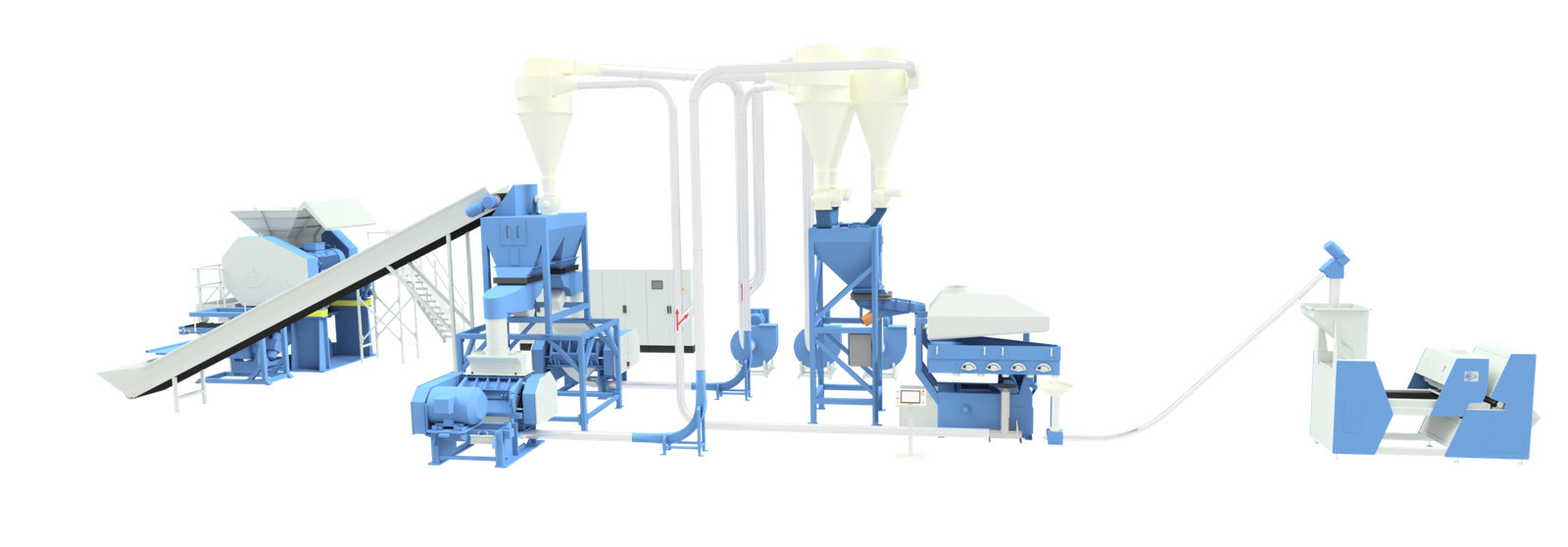
The choice of equipment depends on the characteristics of the incoming cables and the desired output. It is important to distinguish between technologies designed to process whole cables and those used to improve the quality of previously recovered metal and plastic fractions.
Cable stripping and granulation equipment is used in the initial stages of cable recycling, although each performs a different function.
Cable stripping machines remove the insulating sheath from certain types of cables to recover the metal conductor. Cable granulators, on the other hand, reduce cable size and facilitate the liberation of copper or aluminium from insulating materials, preparing the mixture for subsequent separation stages.
Eldan Recycling supplies shredding and granulation equipment that can form part of a complete cable recycling line. These technologies prepare and liberate materials, while Eldan Sorting’s optical sorters are used at later stages to improve the quality of previously processed fractions.
The choice of equipment depends on the type of cable, its dimensions, the composition of the insulation and the plant’s processing objectives.
Once the cable components have been liberated, separation technologies are used to obtain distinct metal and plastic fractions. These include density, pneumatic and electrostatic separation systems, whose application depends on the characteristics of the material and the required purity levels.
When the recovered fractions still contain unwanted materials, optical sorting solutions can be incorporated as an additional refining stage. These systems identify and separate specific components from previously prepared mixtures, helping to improve the purity and commercial quality of recovered copper, aluminium or plastics.
The function of each type of equipment can be summarised in the following comparison:
| Equipment | Input material | Function | Output material | Limitations |
|---|---|---|---|---|
| Cable stripping machine | Cables suitable for mechanical stripping | Remove the insulating sheath | Separated metal conductor and insulation | Suitability depends on cable type, size and characteristics |
| Cable granulator | Cables prepared for size reduction | Fragment cables and liberate their components | Granulated mixture of metals and insulating materials | Does not guarantee separation or final purity on its own |
| Mechanical, density or electrostatic separation systems | Previously shredded and liberated material | Separate components according to their physical properties | Metal and non-metal fractions | Effectiveness depends on particle size, liberation and material properties |
| Optical sorter | Previously prepared fractions | Identify and separate specific materials | Sorted fractions with fewer unwanted materials | Requires suitable material feeding and does not replace shredding or granulation stages |
Comparing equipment without first defining the process requirements can lead to sizing errors, unexpected costs or lower-than-expected performance. Before evaluating different technologies, it is important to establish a technical specification based on the characteristics of the input material, recovery targets and installation conditions.
The first step is to identify which types of cables will be processed and how their composition may vary over time. The performance of a recycling line depends directly on the characteristics of the incoming material.
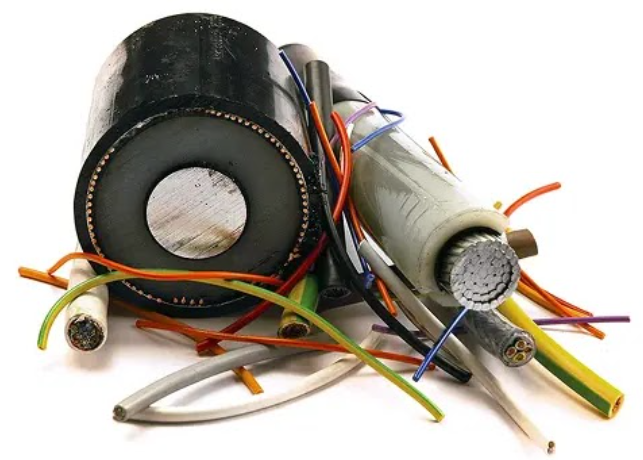
To do this, it is necessary to analyse whether the cables contain copper, aluminium or a mixture of both; the ratio of metal to insulation; the type of insulating sheath (PVC, PE, XLPE, rubber or other polymers); the presence of armouring or textile reinforcements; the distribution of cable diameters and lengths; the presence of dirt, unwanted materials or moisture; and variations in the quality of incoming material throughout the year.
For example, a copper wire recycling machine processing cables with a high metal content may deliver different results when handling thin automotive cables, telecommunications cables or complex mixtures containing aluminium. The more heterogeneous the feedstock, the more important it becomes to have shredding, sorting and separation stages adapted to its characteristics.
Once the input material has been defined, the production and quality targets that the installation must achieve need to be established.
For processing capacity, it is important to determine the required tonnes per hour, operating hours per shift, number of shifts per day, expected annual production and the capacity needed to accommodate potential peaks in incoming material.
Regarding purity, it is essential to define the commercial specifications of the recovered fractions, such as copper or aluminium, and establish the maximum acceptable plastic content in metal fractions or metal content in the plastic fraction. Achieving high purity levels may require additional separation and sorting stages.
It is also important to distinguish between the nominal capacity of a recycling line and the material throughput of each separation unit. The overall plant capacity refers to the total material fed into the process, while the throughput received by a sorter depends on the preceding stages. After shredding, screening or initial separation, only part of the original material reaches certain pieces of equipment.
For example, some cable recycling lines have processing capacities of up to 2 tonnes per hour. However, the throughput received by a sorter at a later stage may be lower, as it depends on the amount of material reaching that stage after the initial preparation and separation processes. Therefore, each piece of equipment should be sized according to the mass balance of the entire process, rather than solely on the installation’s nominal capacity.
Finally, recovery indicates the percentage of metal present in the input material that is successfully recovered. Overall copper or aluminium recovery targets, maximum acceptable losses and expected economic performance must be established.
Purity and recovery should be assessed together, as increasing purity may involve rejecting some valuable material, while maximising recovery may affect the quality of the resulting fractions.
Before selecting equipment, it is necessary to ensure that it can be properly integrated into the existing facilities. This involves assessing both the available floor space and height, input and output storage areas, and the space required for equipment access and maintenance.
It is also important to check the available electrical power, expected energy consumption and the need for utilities such as compressed air, dust extraction and filtration systems, or industrial ventilation. Material handling and conveying equipment, including forklifts, conveyor belts and screw conveyors, should also be considered.
Regarding maintenance and integration, key factors include the frequency of blade replacement and other wear parts, accessibility for inspection and cleaning, the availability of spare parts and technical support from the manufacturer, and compatibility with existing control and automation systems.
Equipment with good separation performance may prove less cost-effective if it requires frequent downtime or involves high maintenance costs.
The following checklist helps gather the main technical and operational requirements before comparing different solutions.
| Parameter | Requirement to define |
|---|---|
| Cable type | |
| Copper content (%) | |
| Aluminium content (%) | |
| Insulation type | |
| Cable size and diameter | |
| Feedstock variability | Low / Medium / High |
| Required capacity (kg/h or t/h) | |
| Daily operating hours | |
| Expected annual production | |
| Target copper purity (%) | |
| Target aluminium purity (%) | |
| Minimum required recovery (%) | |
| Available electrical power | |
| Compressed air availability | Yes / No |
| Dust extraction system available | Yes / No |
| Available floor space (m²) | |
| Available headroom (metres) | |
| Integration with existing equipment | Yes / No |
| Desired level of automation | Low / Medium / High |
| Maintenance requirements | |
| Estimated budget | |
| Future expansion plans | Yes / No |
La clasificación óptica se incorpora al proceso de reciclaje de cables cuando es necesario mejorar la pureza de las fracciones metálicas y plásticas previamente recuperadas. Esta tecnología trabaja sobre materiales que ya han pasado por etapas de trituración, granulación y separación, por lo que no sustituye a los equipos encargados de liberar el metal de la cubierta aislante.
Optical sorting is incorporated into the cable recycling process when it is necessary to improve the purity of previously recovered metal and plastic fractions. This technology processes materials that have already undergone shredding, granulation and separation, so it does not replace the equipment responsible for liberating metals from their insulating sheaths.
In cable sorting solutions, material preparation is essential to enable sensors to identify and separate particles accurately. Optical sorting is therefore typically positioned after mechanical processing and separation stages, such as granulation, density separation or, where applicable, eddy current separation.
Once the material has been prepared, sensor-based sorting systems identify particles according to their characteristics and separate them using pneumatic ejection systems. They can therefore be used to recover residual copper from mixed fractions, separate copper and aluminium fractions, remove certain plastic contaminants or unwanted materials, and reduce metal losses in reject streams.
In this context, Eldan Sorting offers two optical sorting solutions that can be integrated into both existing plants and new installations, depending on the material characteristics and separation objectives:
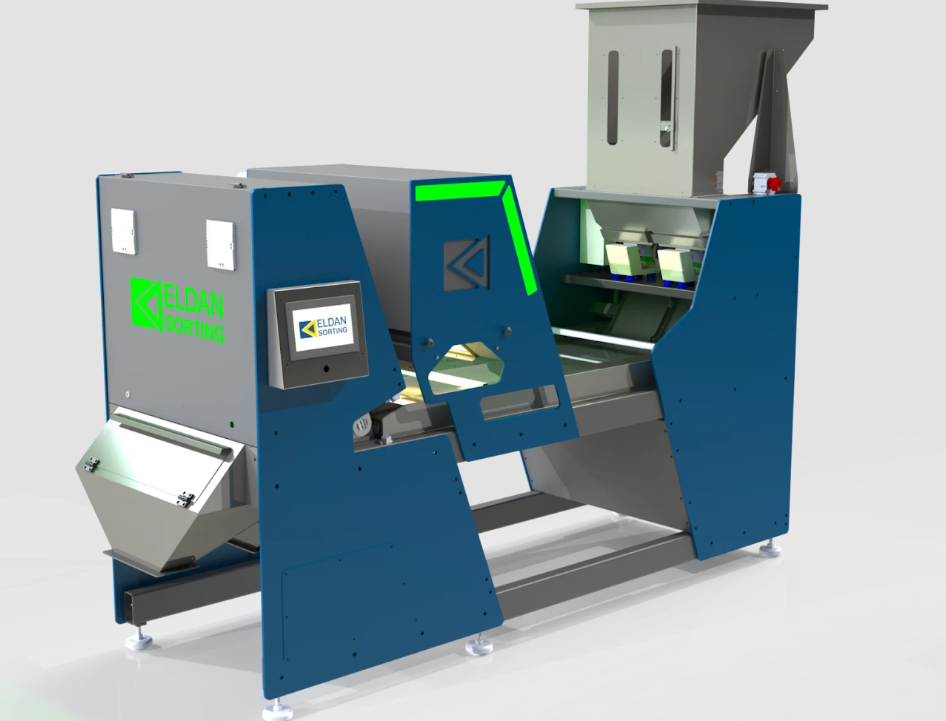
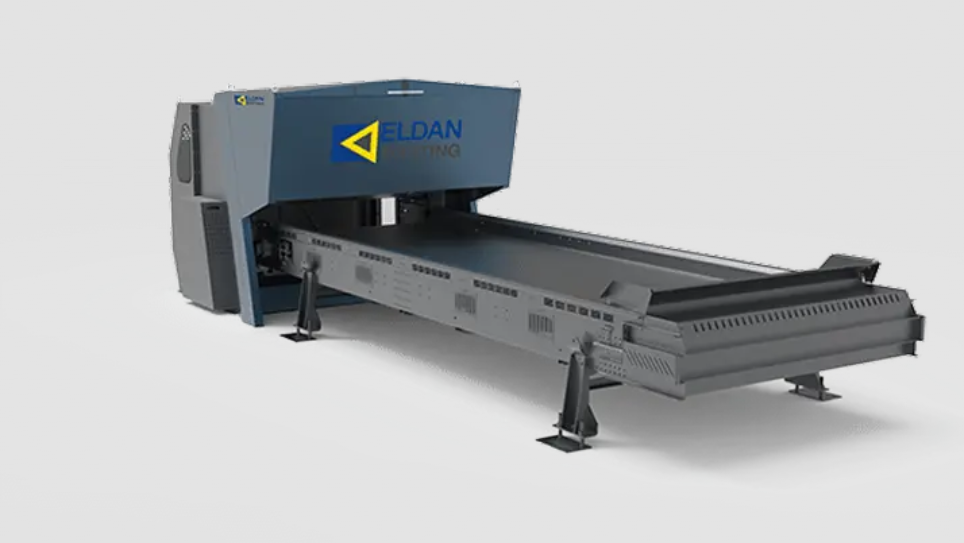
The choice between the two systems depends on particle size, material composition, required processing capacity, and purity and recovery targets. In all cases, optical sorting equipment should be sized according to the characteristics of the fraction it receives, rather than solely on the total capacity of the recycling line.
Choosing a cable recycling machine should not be based solely on its purchase price. It is essential to assess the total cost of the solution, taking into account the initial investment, integration requirements, operating and maintenance costs, and the quality of the recovered materials.
The main factors influencing cost include processing capacity, the number and type of machines required, the level of automation, and any modifications needed to the existing installation. Energy consumption, compressed air and dust extraction requirements, replacement of wear parts, spare parts availability, and potential maintenance downtime should also be considered.
The most suitable solution is one that achieves a balance between investment, final product quality, metal recovery, and operating costs. Therefore, comparing alternatives should take into account both the costs associated with the process and the quantity and quality of the materials that can be recovered.
To validate the choice, it is essential to carry out tests using representative samples of the material that will be processed under actual operating conditions. The results should be based on measurable and reproducible data, rather than solely on nominal capacities or theoretical estimates.
During these trials, it is important to assess actual processing capacity (kg/h or t/h), the purity of the recovered copper or aluminium, the metal recovery rate, the amount of metal remaining in reject fractions, and energy consumption. Dust and fines generation, cleaning and maintenance requirements, and the stability of results when the composition of the input material varies should also be analysed.
For optical sorting equipment, trials using representative material make it possible to assess performance on a previously prepared fraction, verify achievable purity and recovery levels, and identify any adjustments required before integration into the plant. These results should be interpreted within the conditions of the trial and not as validation of the overall performance of the entire recycling line.
To assess the sorting requirements of a specific application, contact the Eldan Sorting team to discuss the available options for testing representative material.