
A magnetic rotor generates induced currents in non-ferrous metals, causing them to be repelled and separated from the waste stream. This method recovers aluminium, copper and other non-ferrous metals from mixed material streams, although its effectiveness is lower when fragments are very small, thin or wet.
Furthermore, it cannot distinguish between different non-ferrous metals. More specific applications involving non-ferrous metal sorting solutions require sensor-based technologies.
Density separation segregates materials according to differences in their specific gravity. Electrostatic separation helps distinguish between aluminium, magnesium, stainless steel and non-metallic materials. This process requires precise control of particle size, and its effectiveness can be affected by irregularly shaped particles.
Sensor-based sorting enables different types of metals to be identified and separated automatically, quickly and accurately. By analysing physical and chemical properties such as elemental composition, density, conductivity and optical characteristics, sensors help improve the purity of recovered materials and increase the efficiency of recycling and material recovery processes.
Different methods are used in scrap metal sorting depending on the type of metal, the required purity level and the size of the material:
An AI-powered RGB camera system, at a significantly lower cost than X-ray-based solutions, enables selective metal identification based on colour, shape, texture and other visual characteristics.
Technologies such as APT Learner use deep learning to train specific models capable of recognising materials such as printed circuit boards (PCBs), cables or specific alloys, going beyond simple colour-based sorting.
For the separation of ferrous and non-ferrous metals, electromagnetic induction sensors detect changes in electrical conductivity and magnetic permeability, enabling rapid separation on conveyor belts. However, their accuracy is lower when distinguishing between complex alloys.
XRT (X-ray Transmission) sorting is based on differences in X-ray attenuation as radiation passes through materials. Denser metals, or those with a higher atomic number, absorb more radiation than less dense materials.
Sensors measure this attenuation and generate an image that enables different materials to be distinguished. The automatic ejection system then separates the identified particles according to predefined criteria.
X-ray fluorescence (XRF) technology is used to analyse elemental composition. It irradiates the material with X-rays, causing the chemical elements present to emit characteristic fluorescence. By analysing this signal, the system identifies the metal’s elemental composition and enables different alloys to be sorted quickly and accurately.
Laser-Induced Breakdown Spectroscopy (LIBS), on the other hand, uses high-energy laser pulses to generate a small plasma on the material’s surface. The light emitted by this plasma reveals the metal’s elemental composition, making it possible to distinguish even very similar alloys, particularly those of aluminium, copper and stainless steel.
Once the material has been identified, a control system calculates the position and speed of each particle on the conveyor belt. When the particle reaches the separation point, one or more pneumatic valves are selectively activated, releasing jets of compressed air.
These air jets deflect the selected particles onto a different trajectory, enabling them to be separated from the rest of the material stream quickly and precisely.
Metal sorting technologies are complementary. When combined within the same processing line, they help maximise recovery and the purity of the resulting fractions.
Each technology measures a different chemical or physical property. Therefore, its suitability depends on the type of metal, the required level of separation and its position within the processing line.
| Technology | Measured property | Suitable task | Limitation | Role in the sorting line |
|---|---|---|---|---|
| Magnetic separation | Magnetic susceptibility | Recovery of steel and iron | Does not detect non-ferrous metals | Initial stage for ferrous metal separation |
| Eddy current separation | Induced electrical currents and resulting electromagnetic response | Separation of aluminium and other lightweight non-ferrous metals from mixed streams | Cannot distinguish between different non-ferrous alloys and is less effective with small particles | Non-ferrous metal recovery following magnetic separation |
| Induction sorting (electromagnetic sensors – EMS) | Electrical conductivity and magnetic permeability | Differentiation between ferrous and non-ferrous metals | Limited ability to identify complex alloys | Intermediate sorting, rapid separation on conveyor belts and improved purity |
| AI-powered RGB cameras | Colour, shape, texture and surface brightness | Identification of copper, brass, painted aluminium and mixed materials | Sensitive to dirt, oxidation and lighting conditions | Pre-sorting and removal of unwanted materials |
| XRT (X-ray Transmission) | X-ray attenuation related to density and atomic number | Separation of light and heavy metals, stainless steel, aluminium and composite materials | Cannot accurately identify alloys with similar compositions | Identification and sorting of different metals based on their X-ray attenuation characteristics |
| XRF (X-ray Fluorescence) | Surface elemental composition | Sorting of stainless steel alloys, brass, copper and speciality metals | Surface-limited information and lower sensitivity to light elements | Alloy identification and analysis for fine sorting |
| LIBS sorting (Laser-Induced Breakdown Spectroscopy) | Elemental composition of metals | Separation of similar alloys, particularly aluminium, copper and high-grade steels | High cost and sensitivity to surface contamination | High-precision sorting to achieve very high purity, particularly in aluminium recycling |
The best technology is one that recovers the target metal fraction at the purity level required by the buyer, while maintaining high recovery rates and a throughput capacity aligned with the plant’s economic objectives.
The selection process must consider the characteristics of the input material and the plant’s operational goals. The most suitable technology should achieve the required levels of purity, recovery and productivity as efficiently as possible. These are the main challenges:
The first step is to analyse the material stream to be processed. Its composition, degree of mixing and, particularly, particle size directly influence the performance of separation equipment.
Ideally, a balance should be achieved between these three key factors:
In practice, there is a trade-off between these three parameters. For example, prioritising maximum purity may lead to higher rejection rates and lower recovery. Maximising recovery may increase the presence of impurities in the final product, while increasing processing speed may reduce detection and separation accuracy.
When selecting a metal sorting technology, it is advisable to evaluate the following criteria:
Eldan Sorting’s sensor-based sorting solutions are frequently positioned after shredding, liberation, magnetic separation, screening and particle size conditioning stages, once the material has reached a suitable size and composition for sensor-based identification.
Designed to process material streams from cable recycling, waste electrical and electronic equipment (WEEE) and non-ferrous metals, Eldan Sorting’s optical sorting solutions, which are significantly more cost-effective than X-ray and LIBS-based technologies, stand out for their ability to accurately identify metals based on colour, appearance and conductivity.
They combine RGB cameras, artificial intelligence for material recognition (APT Learner), inductive sensors and, optionally, near-infrared (NIR) and mid-wave infrared (MWIR) technologies.
Depending on the application, Eldan Sorting offers two systems: the SPS (Small Purpose Sorter), designed for small granules ranging from 3 to 20 mm, with conveyor belt widths of 600 and 1,200 mm, and the MPS (Multi Purpose Sorter), which processes higher-volume material streams on conveyor belts ranging from 1,000 to 3,000 mm in width.
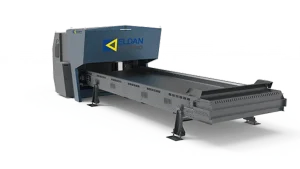
The technology you choose must be capable of efficiently processing the input stream and consistently producing a recovered fraction that meets market requirements, while maximising valuable material recovery and plant profitability.
The suitability of a sensor-based sorting technology depends on the target fractions, particle size, degree of liberation, contamination levels and quality specifications required for the final product.
Before designing an industrial solution, testing representative samples of the actual material stream under controlled operating conditions is recommended to evaluate the resulting purity, recovery and throughput rates.
If your organisation needs to improve metal sorting at its recycling plant, we invite you to contact our team and arrange a meeting.